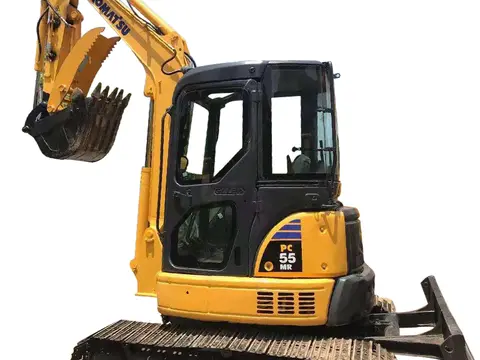
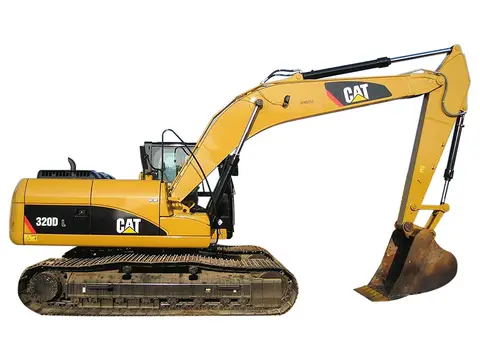
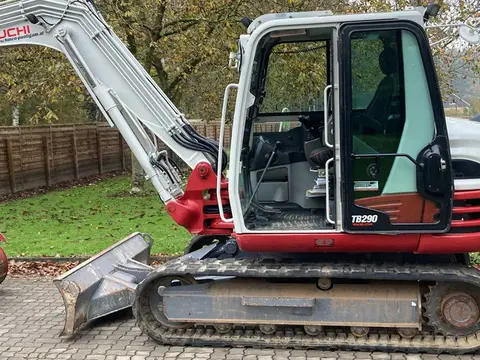
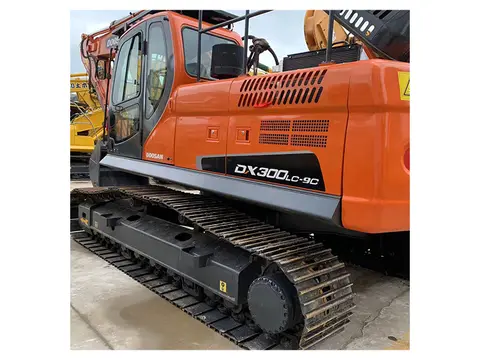
Check the engine cold start, hydraulic pump response, undercarriage wear, swing bearing play, boom pins and the hour meter against service records. If you cannot travel, insist on a live or recorded video inspection that follows a fixed checklist.
A used excavator can save you 40–60% compared with a new machine, but only if you buy a good one. The difference between a machine that works for another 10,000 hours and one that needs a new pump in its first month usually comes down to a careful inspection. This checklist is the one our own inspectors use in our Shanghai yard before any machine is offered for export.
Before you look at the machine
- Confirm the model, serial number and year. Ask for a photo of the serial plate on the frame. The year should match the serial range for that model.
- Ask for the hour meter photo and service history. Hours alone mean little; a well-serviced 6,000-hour machine is often better than a neglected 3,000-hour one.
- Ask where the machine worked. Quarry and demolition machines wear much faster than machines used for farm or utility work.
Engine (points 4–10)
- Cold start. Ask for the engine to be started cold, on video. Hard starting, heavy white or blue smoke, or knocking are warning signs.
- Exhaust colour under load. Black smoke when the boom is raised suggests injector or turbo issues; blue smoke suggests oil burning.
- Blow-by. Remove the oil filler cap with the engine running. Strong pulsing fumes indicate worn piston rings.
- Oil condition. Check the dipstick for milky oil (coolant leak) or fuel smell (injector leak).
- Coolant and radiator. Look for oil in the coolant and for bent or blocked radiator fins.
- Leaks. Look under the engine and around the turbo for fresh oil.
- Belts, hoses and air filter. Cheap to replace, but their condition shows how the machine was maintained.
Hydraulic system (points 11–17)
- Pump response. Raise the boom fully at maximum RPM and time it. Compare with a known-good machine of the same model if possible.
- Multi-function test. Swing, raise the boom and curl the bucket at the same time. A healthy machine stays smooth; a tired pump slows dramatically.
- Cylinder drift. Lift the bucket loaded, switch off and watch for drift over a few minutes. Drift points to worn seals.
- Cylinder rods. Look for scoring, pitting or rust on the chrome.
- Hoses and fittings. Wet hoses and dust-caked joints show leaks.
- Hydraulic oil. Should be clear, not dark or foamy.
- Travel motors. Track the machine in a straight line forward and back. It should not drift to one side.
Undercarriage (points 18–23)
The undercarriage can represent up to half of an excavator’s lifetime maintenance cost, so inspect it carefully.
- Sprockets. Hooked or pointed teeth mean heavy wear.
- Track chains and pins. Check for stretch: a slack chain that cannot be adjusted tight is near the end of its life.
- Rollers and idlers. Look for flat spots, oil leaks and seized rollers.
- Track shoes or rubber tracks. Check grouser height or rubber lug depth and look for exposed steel cords.
- Track frame. Look for cracks and welds.
- Track tension cylinder. It should hold tension without leaking grease.
Upper structure, boom and arm (points 24–27)
- Swing bearing play. Raise the machine on its boom and rock the upper structure. Excess movement means a worn slewing ring.
- Pins and bushings. Look for side play at the boom foot, boom-to-arm and bucket pins.
- Cracks and welds. Check the boom, arm and bucket for cracks or repair welds, especially near the boom foot.
- Bucket and teeth. Worn cutting edges are normal, but a cracked bucket is a cost to factor in.
Cab and paperwork (points 28–30)
- Monitor and electrics. Check for error codes, working gauges, lights, wipers and A/C.
- Controls. Joysticks and pedals should move smoothly and return to centre.
- Documents. For export you will need the commercial invoice, packing list, bill of lading and, depending on your country, a certificate of origin and inspection certificate.
If you cannot travel: the video inspection
Most of our customers never visit China before their first order. Instead, we film a full walk-around and a running test for each machine, following the checklist above, and we answer live on WhatsApp video if you want to see something specific. Ask any seller for the same: a cold start, a multi-function hydraulic test, a travel test and close-ups of the undercarriage and pins.
Want us to run this checklist on a specific machine? Send us the model and we will reply with a test report and video.
FAQ
How many hours is too many for a used excavator?
There is no fixed limit. Many excavators run 15,000–20,000 hours with good maintenance. For a mini excavator, under 4,000 hours is considered low; for a 20 ton excavator, under 6,000 hours is considered low. Service history matters more than the number.
What is the most expensive part to repair on an excavator?
The main hydraulic pump, swing bearing and undercarriage are the most expensive items. That is why a hydraulic multi-function test and an undercarriage check are essential.
Can I inspect an excavator in China remotely?
Yes. Ask the seller for a cold start, hydraulic test and travel test on video, plus close-up photos of the undercarriage, pins and serial plate. We also provide a written test report for every machine.
Our mechanics and export staff test and ship used machinery from Shanghai every week. This guide reflects what we see in our own yard.